Your Fleet Is Your Balance Sheet
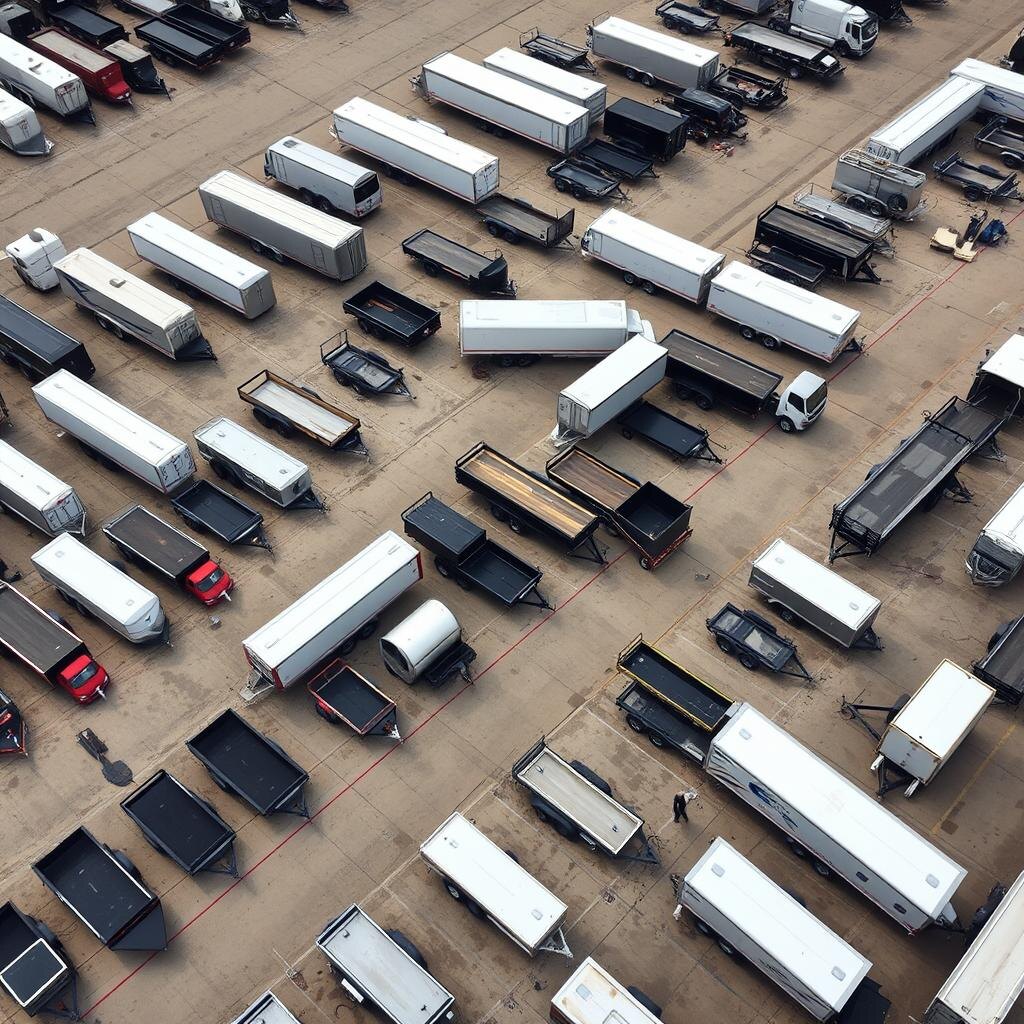
A trailer rental business doesn't keep its value in a building — it keeps it in the rows of units sitting on the lot and out on rent. A modest fleet adds up fast: thirty utility trailers at $2,500, a dozen dump trailers at $9,000, a handful of enclosed cargo units at $7,000, and a couple of car haulers at $6,000 will clear $300,000 before you've counted the ramps and spare tires.
When one of those units is destroyed, the question that decides whether you're made whole is deceptively simple: how is it valued at claim time? Two operators with identical fleets can get wildly different checks after the same loss, purely because of how their rental fleet physical damage policy was written.
Actual Cash Value vs. Replacement Cost
This is the single most important choice in your fleet policy.
- Actual Cash Value (ACV) pays the depreciated value of the trailer at the time of loss. A five-year-old dump trailer that cost $9,000 new might be valued at $5,000 — so that's the check you get, minus your deductible. ACV premiums are lower, but you absorb the depreciation gap when you go to replace the unit.
- Replacement Cost (RC) pays what it costs to buy a comparable new unit today, with no deduction for age or wear. That same dump trailer gets replaced at current market price. RC costs more in premium but keeps your fleet whole — and protects you from the reality that trailer prices have risen sharply in recent years.
For most rental operations, the right answer isn't one or the other — it's a hybrid schedule: replacement cost on newer, high-value units where the depreciation gap would hurt, and ACV on older units that are nearly written down anyway.
Scheduled vs. Blanket: Matching Coverage to How Your Fleet Moves
The second structural decision is how units are listed on the policy.
- Scheduled coverage lists each trailer individually, usually by VIN, with its own value. It's precise and often cheapest for a stable fleet — but every time you add or retire a unit, the schedule has to be endorsed, and a trailer you forgot to add is a trailer that isn't covered.
- Blanket coverage insures the whole fleet up to a single limit. New units are automatically covered as you acquire them (up to the limit and reporting terms), which suits a fast-turning fleet that's constantly buying and selling. The tradeoff is making sure your blanket limit is high enough to cover your maximum on-hand value.
A growing rental business usually outgrows a rigid schedule. If you're adding units every quarter, a blanket limit with periodic value reporting saves you from the "we never endorsed that one" claim denial.
Right-Sizing the Limit So You're Not Over- or Under-Paying
Two mistakes cost operators money:
- Under-insuring to save premium, then discovering after a yard fire or theft spree that your limit doesn't cover the units actually lost. Some policies also apply a coinsurance penalty if you're insured below a required percentage of value.
- Over-insuring by carrying replacement cost on units that are nearly worthless, paying premium you'll never recover.
The fix is an honest, current fleet valuation — unit types, ages, current market values, and your realistic maximum on-hand exposure — reviewed as the fleet changes. We build the schedule around that, and revisit it as you grow.
Don't Forget: This Covers the Trailer, Not the Liability
Rental fleet physical damage protects the asset. It does not pay third parties when a rented unit causes an accident — that's liability for rented units and contingent & excess liability, separate coverages that belong in the same program. A complete rental insurance package coordinates all of them so nothing falls through the gap at the hitch.
The Bottom Line
How your fleet is valued and scheduled is not paperwork — it's the difference between replacing a totaled unit and eating the loss. Get the ACV-vs-RC mix right, match scheduled vs. blanket to how fast your inventory turns, and keep your limit honest.
Want a fleet valuation and a quote structured around your actual units? [Request a quote online](/quote) and Contractors Choice Agency will build it around your actual units.