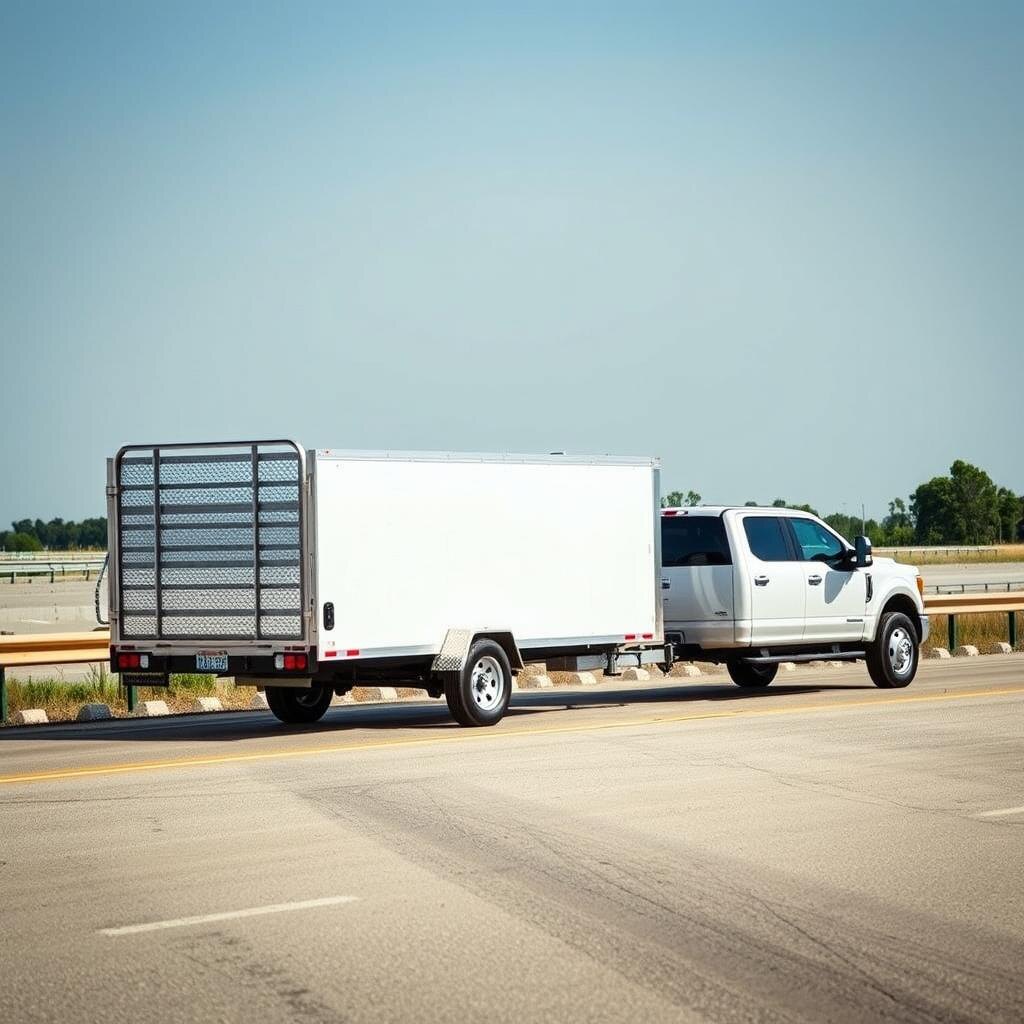
The Assumption That Costs Rental Operators Thousands
Ask most trailer rental owners who pays when a customer wrecks or loses one of their units, and you'll hear some version of the same answer: "The renter's insurance covers it — they have to show me proof before they tow it off the lot." It sounds reasonable. It's also, in the majority of cases, wrong.
The renter's auto policy is built to protect *the renter* — their car, their liability to other people. It was never designed to replace a $12,000 dump trailer that belongs to your business. When you understand how personal auto policies actually treat non-owned towed trailers, you stop relying on your customers' coverage and start protecting your own asset.
What a Personal Auto Policy Really Does for a Towed Trailer
Here's the part that surprises operators: a standard personal auto policy typically provides little or no physical damage coverage for a trailer the customer doesn't own.
- Liability may extend — physical damage usually doesn't. The renter's liability coverage often follows them to a trailer they're towing, which helps third parties they injure. But comprehensive and collision — the coverages that would actually repair or replace *your* trailer — frequently don't extend to a non-owned unit at all.
- Many policies exclude trailers outright. Plenty of personal auto contracts contain language excluding trailers above a certain size or weight, or exclude "vehicles furnished or available for regular use."
- Even when it applies, the limit is the renter's. If their policy does respond, it pays subject to their deductible and their limit — not yours. You don't control any of it.
- A theft off a job site is rarely their problem. If your trailer is stolen while in the customer's possession overnight, their auto policy almost never makes you whole.
So the proof-of-insurance you collect at the counter is worth having — but it protects the renter far more than it protects your fleet.
The Coverage That Actually Protects Your Units: Fleet Physical Damage
The right answer is rental fleet physical damage coverage, written as inland marine on the trailers themselves. Unlike a policy tied to a building or a lot, inland marine follows the unit wherever it goes.
- On-lot and on-rent. Your trailers are covered sitting in the yard *and* while a customer is towing one down the interstate. That's the whole point — your inventory is rarely on your lot.
- Collision and upset. When a renter jackknifes a car hauler or rolls a utility trailer, the policy repairs or replaces it.
- Theft and vandalism. Stolen off your lot overnight or from the customer's site — covered.
- Weather and fire. Hail, wind, and fire damage to parked units are included.
You can schedule units individually by VIN for smaller fleets, or carry a blanket limit so a fast-turning fleet can add and retire trailers without re-endorsing every time.
Don't Forget the Liability Side: Contingent & Excess
Physical damage protects the trailer. It doesn't protect you when a renter causes an accident and turns out to be uninsured or underinsured — which is more common than operators expect. Roughly one in eight U.S. drivers carries no insurance at all, and many of the insured carry only state-minimum limits.
That's where contingent and excess liability comes in. It sits behind the renter's policy and responds when their coverage is exhausted, denied, or never existed. Paired with fleet physical damage, it closes both halves of the gap: the trailer itself, and the liability when the renter's insurance fails.
The Bottom Line
Collecting a renter's certificate is good practice — but treating it as your safety net is a mistake that surfaces at the worst possible moment, with a totaled unit and a denied claim. Your fleet is your revenue. Insure it directly.
Want to know what proper fleet physical damage and contingent liability would cost for your operation? [Request a quote online](/quote) and Contractors Choice Agency will build it around how your trailers actually get rented out.